

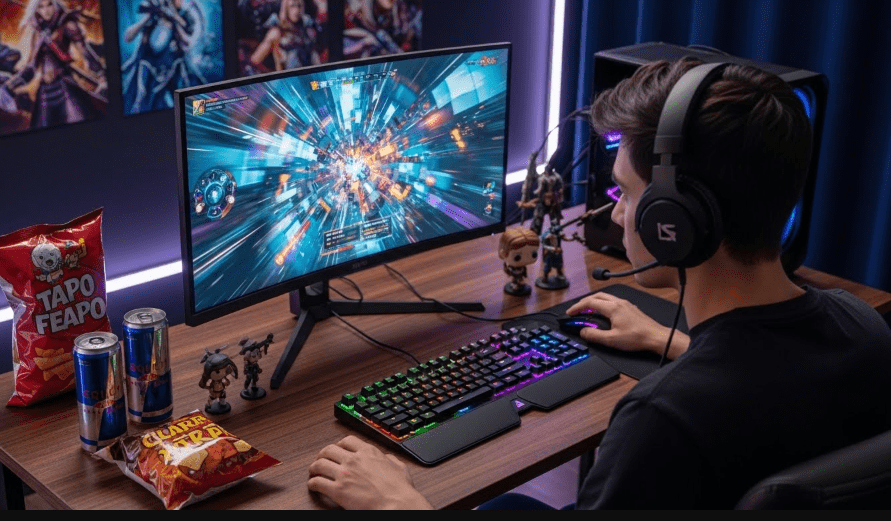
The concept of leisure has undergone a massive paradigm shift over the last twenty years. Historically, unwinding after a long day meant sinking into a sofa and letting a television screen broadcast stories at you. Today, the world has moved toward “active” entertainment. We no longer want to just watch; we want to participate, influence outcomes, and test our cognitive limits. This transition into interactive digital spaces has turned our smartphones and laptops into versatile playgrounds that cater to every psychological need—from the high-octane thrill of a quick win to the slow, methodical satisfaction of a long-term strategy.
As we navigate this digital landscape, it becomes clear that the attraction to these platforms isn’t just about “killing time.” It is about the unique way these experiences stimulate the human brain, offering a blend of risk, reward, and mental conditioning that physical media often struggles to match.
The Science of the “Small Win”
One of the most powerful psychological drivers in modern entertainment is the concept of micro-achievements. Our brains are biologically wired to seek out rewards, a process governed by the release of dopamine. In the digital realm, this is often achieved through high-energy, visually stimulating environments that offer immediate feedback.
For many, the appeal lies in the simplicity and speed of modern chance-based games. The vibrant graphics and rhythmic sounds associated with a digital slot777 create a focused sensory experience. This isn’t merely about the result of a single spin; it is about the “flow state”—a mental zone where the outside world fades away, and the player is fully immersed in the rhythm of the game. This type of engagement provides a temporary but effective “cognitive reset,” allowing the mind to detach from the complexities of daily stressors and focus on a singular, contained event.
The Endurance of Ancient Strategy
While high-speed digital games provide an instant spark, there is an equally strong movement toward traditional games that have been “digitally upcycled.” These are the games that have survived for centuries because they challenge the human spirit in a way that technology cannot replace—only enhance.
Among these, tile-matching games stand as a testament to the power of pattern recognition and tactical patience. The strategic depth found in a digital session of mahjong offers a stark contrast to the fast-paced nature of modern action games. It requires a different kind of mental muscles: memory, probability assessment, and the ability to read an opponent’s intentions. By bringing these ancient practices into the digital era, we have made complex mental training accessible to anyone with an internet connection. This bridge between old-world wisdom and new-world technology ensures that our brains stay sharp, even during our downtime.
Why Variety is the Secret to Digital Wellness
Just as a physical workout routine requires “cross-training” to be effective, our digital habits benefit from variety. Engaging solely in one type of activity can lead to mental stagnation. However, by alternating between different genres, we exercise different parts of the brain:
- Reflexive Games: Improve hand-eye coordination and spatial awareness.
- Strategy Games: Enhance executive function, planning, and long-term memory.
- Social Games: Foster communication skills and emotional intelligence through collaborative play.
The modern gamer—whether they are a casual player on a commute or a dedicated strategist at home—is essentially engaging in a form of neuroplasticity training. By constantly learning new rules, adapting to new mechanics, and solving virtual problems, we are keeping our neural pathways active and flexible.
The Social Connectivity of Virtual Hubs
Perhaps the most significant benefit of the modern digital playground is its ability to dissolve geographical boundaries. In the past, a game of cards or tiles required a physical gathering. Today, these platforms serve as global meeting grounds. We are seeing a rise in “community gaming,” where the social interaction is just as important as the game itself. Whether through live voice chats or competitive leaderboards, these platforms provide a sense of belonging and shared purpose that is vital in an increasingly isolated world.
Conclusion: Embracing the Future of Play
As we move further into 2026, the distinction between “online” and “offline” life continues to blur. Our entertainment choices are no longer just distractions; they are reflections of our need for growth, connection, and excitement. By choosing platforms that challenge our minds and provide genuine joy, we turn our leisure time into an investment in our own mental well-being. Whether you are chasing the thrill of a jackpot or meticulously building a winning hand of tiles, the digital world offers a limitless horizon of discovery.